


Okay, so check this out—I’ve been bouncing between wallets for years. Wow! Some were clunky. Others were overly clever. My instinct said there had to be a middle ground: fast, secure, and smart about transactions. Initially I thought a new extension wouldn’t move the needle, but then Rabby surprised me. Really? Yes.
Short version: rabby wallet brings multi-chain convenience and transaction simulation into a Chrome extension that feels like it was designed by people who actually use DeFi every day. Hmm… that sounds like marketing, I know. But hear me out—I’ve used it for swaps, bridging, and contract interactions, and certain little features saved me money and time. On the one hand, it’s a small UX win. On the other, those wins compound when you’re making dozens of moves a week.
Here’s what bugs me about other wallets: they assume every user is either a total newbie or a hardcore dev. There’s rarely a middle ground. Rabby aims squarely at the people in-between—power users who still want clarity. My first impression was: clean UI, no fluff. Then I dug deeper.
What stands out (and why it matters)
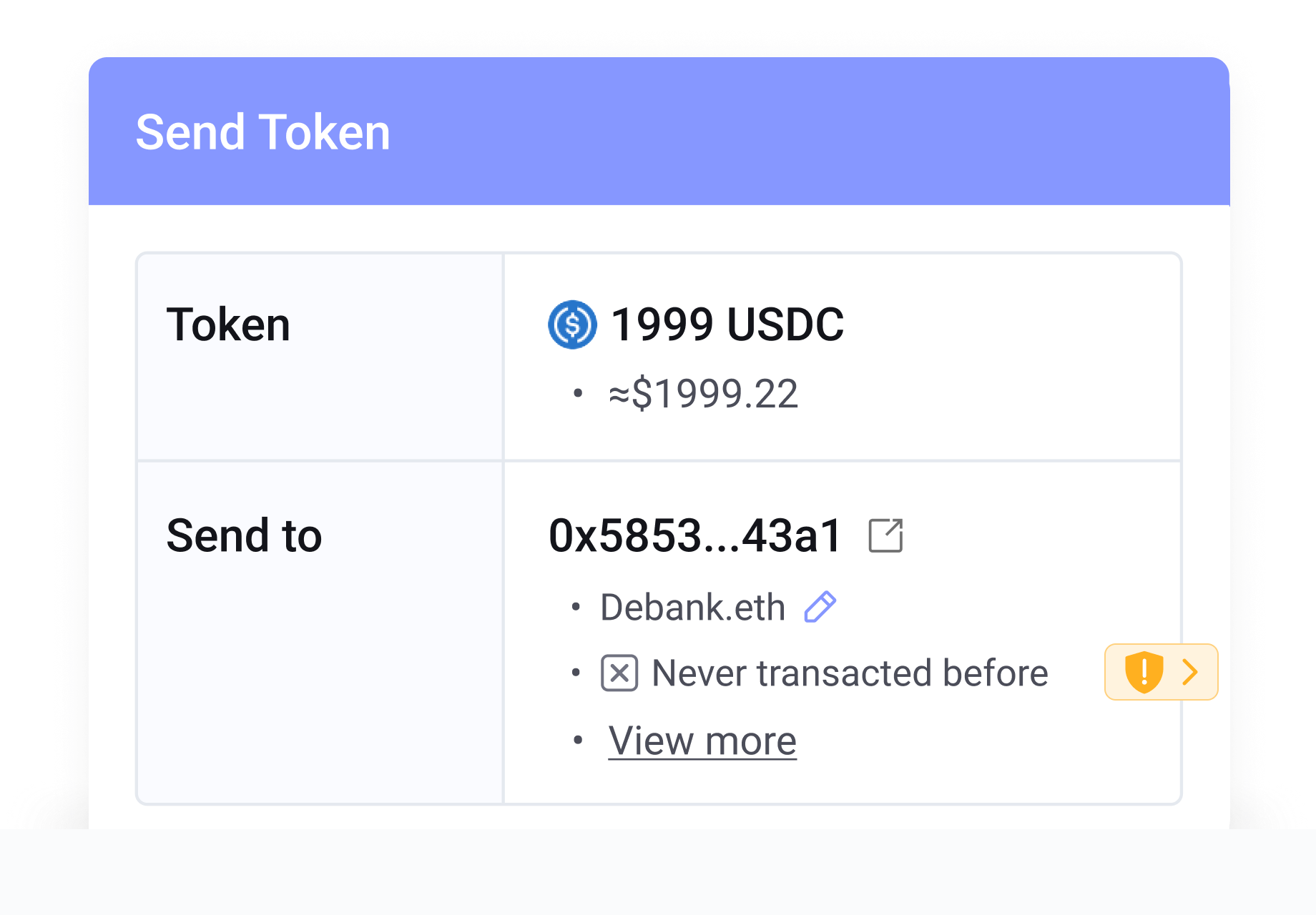
Quick hits—transaction simulation is the headline. Wow! It previews what a contract call will do before you sign. That alone cuts down on accidental approvals and surprise failures, and it helps you avoid getting rekt by bad slippage or rogue calldata. Medium complexity, but the takeaway is simple: fewer wasted gas fees. I don’t like wasting ETH on failed txs. Seriously? No one does.
Multi-chain support is another core piece. Rabby plays nice across EVM chains, so you can manage assets on mainnet, Layer 2s, and popular sidechains without juggling extensions or multiple wallets. That sounds boring until you realize how annoying chain switching is during a speed trade. My workflow became smoother very fast—though actually, wait—there were a couple of quirks when a new RPC behaved oddly. Not perfect, but close.
Security feels pragmatic. It offers approvals management and a clear approvals UI so you can revoke allowances without digging through block explorers. I liked that—it’s a small control that makes a big difference when a token does something weird. On one hand, any browser extension carries risk. On the other hand, good permission hygiene reduces the attack surface. I’m biased, but that control matters to me.
Transaction batching and nonce control are subtle features that power users appreciate. You can line up multiple txs and manage nonces when networks behave unexpectedly. This is not flashy. It’s one of those things that saves your bacon when mempools get weird. (Oh, and by the way… I used that during a congested morning in New York and avoided a nasty nonce conflict.)
Also: the onboarding felt fast. Medium complexity again—wallet setup, seed phrase backup, and basic security steps were straightforward. That matters if you want to get to trading instead of wrestling with the UI. There’s still room to improve advanced documentation for new L2s, though. I’m not 100% sure they cover every niche chain yet, but they cover the big ones very well.
How the transaction simulation actually helps you
Imagine you submit a swap on an AMM and the router behaves differently than you expect. Long story short: simulation tells you the likely on-chain result before you commit gas. Short sentence. It shows slippage outcomes, whether a call will revert, and gas usage estimates. That’s the practical win: you avoid failed transactions and you can tweak slippage or gas limits proactively.
When I first used simulation, I thought it would be slow. It wasn’t. On a morning when gas spiked I simulated a complex route, adjusted parameters, and executed without drama. Initially I thought X, but then realized Y: that simulation doesn’t need to be blast-fast to be useful—it needs to be accurate enough to change your decision. On the flip side, there were times where simulation flagged a potential revert that I manually inspected and found was due to a particular router param. So it’s a tool, not an oracle. Use it, but verify when things look odd.
For smart-contract heavy users, the visibility into calldata and function signatures is helpful. You don’t have to blindly approve weird contract calls. My instinct said trust but verify, and rabby wallet’s outputs made that much easier. There were moments I caught sloppy dApps before hitting send. Very very important.
Installing and getting started
Download is straightforward. If you want to give it a spin, grab the extension and follow the setup flow. It’s designed for Chrome and Chromium-based browsers, so if you’re on Brave or Edge you’ll be fine. I installed it on a fresh profile to test compatibility and then moved to my daily profile—smooth transition. One caveat: always back up your seed phrase. Seriously—do that before you mess with anything else.
For a direct link to the extension and official download instructions, check out rabby wallet. That’s the authoritative spot they point users to for installation steps and updates.
Real workflows where Rabby shines
Arbitrage sequences. Fast trades across DEXes. Complex contract interactions where you want to preview gas and outputs. Those are the day-to-day scenarios that benefit most. My workflow: open the wallet, simulate a swap, confirm router path, adjust slippage, and then execute. The simulation reduced failed txs noticeably. On one trade I avoided a failed sandwich attack because simulation revealed a slippage pattern that looked off. Whew.
For builders and auditors, the approvals list and transaction history are quick sanity checks. They’re not a replacement for deep audits, but they let you spot red flags without a block explorer. That saved me time during a quick code review, and saved a friend a lost token when she nearly approved a malicious allowance.
Not everything is perfect. There are occasional RPC timeouts on newer testnets, and sometimes UI wording could be clearer for edge cases. But these are product bugs, not design failures. They get fixed. The overall architecture favors user control, which is what I care about.
FAQ
Is Rabby Wallet safe to use?
No wallet is bulletproof. That said, rabby wallet prioritizes permission controls and transaction previews, which reduce risk vectors. I’m not saying it’s immune to vulnerabilities—browser extensions have inherent risks—but its features help you stay safer than many defaults.
Which chains does it support?
It supports major EVM chains and popular Layer 2s. If you’re working with niche or brand-new networks, check compatibility before moving large amounts. You can usually add custom RPCs, though that sometimes requires manual tweaks.
Can I import my seed from another wallet?
Yes. Importing is straightforward. But be careful: importing a seed to multiple environments expands your attack surface. Best practice is to keep a primary secure device and only import when necessary.
One last thought—using a tool doesn’t absolve you from responsibility. Seriously. The wallet is an aid, not an autopilot. My gut feeling sometimes steers me wrong, and the simulation nudges me back to sanity. Use it as part of a careful workflow: simulate, inspect allowances, and only then sign. If you trade a lot, you’ll quickly appreciate how those small checks compound into real savings.
Anyway—I’m biased toward tools that respect power users. Rabby does that. It’s not flawless. It won’t magically make bad strategies profitable. But it reduces friction and accidental losses, and for many of us who live in the fast lane of DeFi, that’s the real win. I’m curious where they go next. For now, it’s in heavy rotation on my browser, and I keep learnin’ little tricks from the team and the community.
Leave a Reply